Strengths & Skills
What are Employers really looking for?
Topics in this section

According to research there are 6 key skills that employers are looking for when taking on new members of staff. These are listed below so you can look at your own strengths, skills and experience to see how they match up to the ones that employers are looking for.
If you have some gaps then you can plug these with training, or getting additional experience to boost your chances.
Don’t forget to tell them about your broader strengths and skills as well.
The top 6 Key Skills Employers are typically looking for
These are the top Key Skills that will help you get a job – how many of these do you already have? Click the headings below to find out what these skills include…
These skills are what employers are really interested in, so make sure you get the message across in your CV and how you present yourself to potential employers.
Click the link to download our Key Skills Questionnaire and review where you are up to – Lighthouse Key skills questionnaire
1. Teamwork & Leadership
Teamwork: You’ll need to prove that you’re a team player but also have the ability to manage and delegate to others and take on responsibility. It’s about building positive working relationships that help everyone to achieve positive goals and business objectives.
Leadership: You may not be a manager straight away, but you’ll need to show potential to motivate teams and other colleagues that may work for them. It’s about assigning and delegating tasks well, setting deadlines and leading by good example.
2. Communication
Communication: This covers verbal and written communication, and listening. It’s about being clear, concise and focused; being able to tailor your message for the audience and listening to the views of others.
3. Problem Solving
Problem solving: You need to display an ability to take a logical and analytical approach to solving problems and resolving issues. It’s also good to show that you can approach problems from different angles.
4. Managing Yourself
Managing yourself & priorities: This is about showing that you can prioritise, work efficiently and productively, and manage your time well. It’s also good to be able to show employers how you decide what is important to focus on and get done, and how you go about meeting deadlines.
Perseverance and motivation: Employers want people to have a bit of get-up-and-go. Working life presents many challenges and you need to show employers that you’re the kind of person who will find a way through, even when the going gets tough… and stay cheerful-ish.
Ability to work under pressure: This is about keeping calm in a crisis and not becoming too overwhelmed or stressed.
Confidence: In the workplace you need to strike the balance of being confident in yourself but not arrogant, but also have confidence in your colleagues and the company you work for.
5. Customer Service
Customer Service: The ability to deal with and support customers, the lifeblood of all businesses. Including listening skills, being helpful & courteous, negotiation skills, dealing with complaints.
Commercial awareness (or business acumen): This is about knowing how a business or industry works and what makes a company tick. Showing that you have an understanding of what the organisation wants to achieve through its products and services, and how it competes in its marketplace.
Negotiation and persuasion: This is about being able to put forward your way, but also being able to understand where the other person is coming from so that you can both get what you want or need and feel positive about it.
6. Computer & Digital Skills
Computer & Digital Skills: This is about being able to use computers and the internet. Technology is at the core of many businesses and so you need to be able to show that you can use common office software programmes, and make use of the basic tools needed for any modern workplace, see below:
Such skills would include the 5 basic digital skill areas:
1. Managing information: Using search engines, looking for information online, downloading documents, images, etc.
2. Communicating: being able to use email, social media, and online messaging services, including making comments, sharing information, completing product reviews, etc.
3. Transacting: Being able to buy things or services from a website, buying and installing apps on devices, completing online registrations, or signing up for services, or newsletters, etc.
4. Problem Solving: Using online help, or forums to solve problems you may have with a device, or software, or digital services. Verifying sources of information you found online, being able to spot scams and phishing. Accessing ‘teach yourself’ online learning and tutorials.
5. Creating: Being able to create documents or publications, e.g. a CV or letter. Completing online applications forms. Creating and sharing something new, from a photo album, or music, or media files.
Ask yourself if you have these essential skills, and if not then find out how to can learn them. You can build up your digital skills at the Lighthouse Project by using the Learn My Way toolbox of beginners courses and modules.
Also include your broader strengths & skills
Make sure you tell them about your broader strengths and skills. Employers are always looking for added value, and you never know one whether one of these additional skills may just tip the balance when choosing between you and another applicant. Don’t undersell yourself. Your skills and experience are valuable.
Here are some suggestions to consider …
People based Skills
- Explaining things to people
- Dealing with complaints or enquiries
- Organising people
- Putting people at ease
- Talking and listening to people
- Selling, persuading, negotiating
- Motivating others
- Working effectively in a team
- Managing, supervising or leading
Thinking Skills
- Coming up with new ideas
- Evaluating different ideas
- Thinking of improvements
- Planning ahead and setting goals
- Developing other people’s ideas
- Deciding between different approaches
- Working out how to deal with things that have gone wrong
- Developing projects and ideas
Practical Skills
- Using a keyboard
- Diagnosing faults and testing equipment
- Handling materials or tools
- Maintaining equipment or machinery
- Mending and repairing things
- Full, clean UK driving licence
Research and academic Skills
- Keeping accurate records
- Making accurate measurements
- Working out costs and budgeting
- Checking information for accuracy
- Writing letter, memos and reports
- Extracting information from reports, books, courses of action, or manuals
- Organising paperwork systems
- Organising or classifying information
Use specific achievement to highlight or showcase your skills. For example: Developing projects and ideas – “In my role as team leader in the warehouse I developed a new method of recording deliveries which reduced errors by 50%”, or use an example from your everyday working life, e.g. Planning ahead and setting goals – “as an HGV driver I had to plan routes for my deliveries and set a time for when the delivery would be made allowing for traffic problems”, etc. this demonstrates your experience to a potential employer in a tangible way.
Skills Assessment Tools
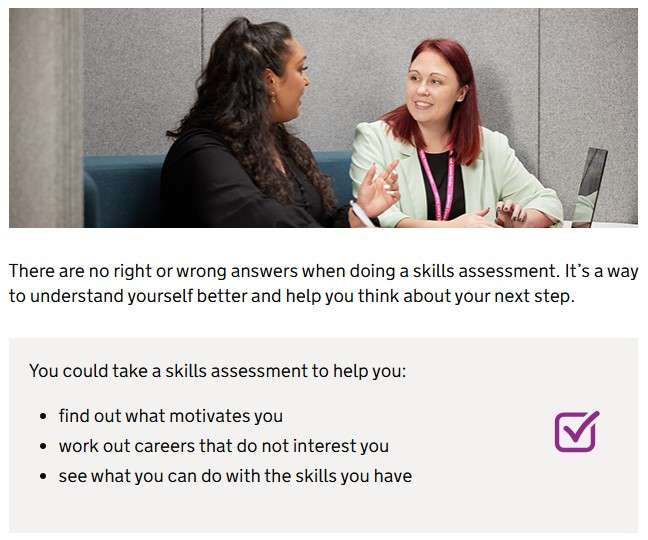
A skills assessment can help you in two ways;
- It is a way for you to look at the skills that you have and match them to a particular career, or type of work.
- It will help you identify the skills that you currently have, so that you can promote these to potential employers.
The assessments usually take the form of answering some questions about yourself, which are then analysed to give you suggestions and further pointers.
A good place to start is with the National Careers Service.
The assessment
- Contains 40 multiple-choice questions
- Takes 5 – 10 mins to complete
- Gives you a reference code you can come back to later
Personal Development Tools
Personal Development is where you spend time and effort to develop yourself as a person; for example, learning new things, adjusting your lifestyle, starting new things, to empower and draw out your potential. Self-development is a combination of many things, it is a lifelong journey of discovery and growing to get the best out of who you are.
When you know more about yourself you are better placed to advance and improve. Improvement, like many things, requires commitment, intention and focus in order to reach your goals. But this can be an exciting time of adventure and discovery.
An elastic band never really realises its potential until it is stretched. The stretching will obviously feel uncomfortable at first, but after some repetition it will soon discover it has more capacity than it realised when it was just lay on the desk, all floppy and loose.
Personal development can be so fulfilling and rewarding, so, let’s look at some ways that you can start to grow and improve yourself. These are a few areas to explore:
Without sounding obvious, in order to move forward you need to know where you currently are, what skills you have, and what skills you need. So, before you set off on your journey of improvement you need to consider what you already know. From this you can then work out what you need to add into the mix of your life.
Improving yourself is not a single event, but a progression of steps, similar to a staircase. If you keep going, one step at a time, you will eventually arrive at the higher level that you want to reach. Keep moving forward.
There are lots of useful tools to help you identify your skills, and to match them with particular types of work. It is not a bad thing to know what you are good at, or to identify what you need to learn. We have other resources to help you do this on other parts of this website.
If you set off on any journey without knowing where you are going, how will you know when you’ve got there? Sometimes it is okay just to wander about, like you might do on holiday, enjoying the adventure of discovery and just roaming about, but in developing your career and work opportunities this is not the best approach.
So, to get started set yourself some goals, make sure that they are realistic and achievable, and consider the steps it will take to get you there. You can set a mixture of goals, some short-term and some longer-term. These will help you to keep you focused and moving in the right direction. They will also help you to weed out any potential distractions and side-tracks.
Review your goals regularly, and learn to celebrate your achievements, however small they are. Progress is progress, and all to often we dampen our own motivation by being overly critical of ourselves. So, enjoy celebrating your progress!
Self-reflection is a useful tool to help you grow. It involves you spending some time looking inward, and gaining a deeper understanding of yourself, your strengths, and weaknesses, values and goals. We are not always encouraged to spend time doing this, and at first it can seem a bit awkward and unfamiliar. But given time it is a valuable means of becoming aware of yourself, your desires, your potential, and want you really ant to achieve in life.
Journaling is a useful way of reflecting, it involves writing down your inner thoughts, allowing ideas to come forward, and for you to record how you feel about different things and your experiences. Writing helps us to process emotions, gain clarity or perspective, and identify patterns , habits, or areas of change. Your writing becomes part of your reflecting .
Being thoughtful and mindful about your circumstances and environment is another way of getting more connected to yourself. Busyness can take over and stop us spending time in quiet or creative thought, being mindful helps us to become calm and more relaxed which brings its own benefits and clarity.
Time Management is an important skill for unlocking your potential and avoiding delays or procrastination. It helps you to prioritise important tasks, avoid distractions, and plan the things you need to do so they can be completed.
Improving time management includes:
- Making a daily to-do list, and prioritising the 3-5 most important tasks. Focus on these before moving on to other things.
- Use a diary to schedule blocks of time to focus on priority tasks, and work to complete them.
- Link similar tasks together to maximise efficiency.
- Eliminate distractions during focused work, Put the phone on silent, or put a notice on your door so people know not to disturb you. Work in a different room or find a quieter space to help you concentrate.
- Take breaks during intense period of work, get up, stretch your legs, go outside briefly, just to keep you refreshed.
- Delegate tasks where possible, share the work load, empower people to collaborate and contribute to the task
- Review your work patters to see if there is anything you can do differently to free up more time, or minimise interruptions or distractions.
All of these things will help you to improve your productivity and have more control over your work rate. Life, and work are full of distractions and invitations to do something else, and sometimes this is appropriate, but at other times its not.
Having an open mind to learning is a great way of improving yourself and growing in knowledge and understanding. It is a key part of personal development. Here are a few ways you can do this:
Read books on personal growth. Reading just 30 minutes a day can make a big difference over time. Your hobbies and interests can also broaden your knowledge and understanding of things. Look for well-reviewed person development books to read.
Get an E-Book reader and enjoy the benefit of many free e-book lending services.
Online Learning courses are a flexible way to pick up new skills and knowledge. You can learn from experts who want to share their knowledge. There are many free courses, as well as paid courses, look out for free Open Source learning to help you. There are literally 1000’s of course on topics such as technology, business, marketing, personal development, etc.. Many of the popular job hunting websites also offer learning courses and webinar sessions you can attend.
If you can make lifelong learning a habit your life will be enriched no end. Learning new things exercises your mind, and exposes you o new perspectives and opportunities, it keeps you curious and makes life exciting.
The simple thought here is that developing good habits and breaking bad habits is essential for your persona growth. If you think about sports people, they have coaches to help them change bad habits that affect their ability, and introduce them to new skills and habits that improve their performance and growth.
Start small and build up layer upon layer. Pick a few things to change, and a few things to introduce. If you go too hard too fast you will soon give up. So, steady and sure is the plan here. This could be as simple as, doing a 15-minute walk after a meal, reading 30 pages a day, or sitting quietly for 10 minutes at lunchtime.
Give each thing time to settle in, habits come from repetition, and then they become more automatic and part of your established behaviour. Be patient, and consistent over time, and then you will see results.
If you need to, have someone you can be accountable to, to help you stay motivated, and to be an encouragement to you. Do regular check-ins, and celebrate success together. We all respond to rewards, but make them appropriate.
Be persistent, don’t beat yourself up the first time you fail. failure is part of the learning journey. Just start again, and as you persist you will get there, and those small daily habits will become part of your regular practice and routine.
Taking care of your physical, mental, and emotional health is crucial for unlocking your full potential. Self-care allows you to recharge, nurture yourself, and thrive in all areas of life.
Physical Health
Physical health impacts everything you do, so taking care of your body is essential. Eat nutritious foods, stay hydrated, exercise regularly, and get enough sleep. Consider joining a gym or taking fitness classes. Develop habits that support your physical well-being.
Mental Health
Boost your mental health by managing stress through meditation, yoga, or deep breathing. Keep your mind active and engaged by reading, writing, or learning new skills. Make time for hobbies you enjoy. Connect with others for stimulation and support. Seek professional help from a therapist if you are struggling with mental health issues.
Emotional Health
Pay attention to your emotions and process difficult feelings through journaling or talking to trusted friends. Do activities that make you feel happy and fulfilled. Be kind to yourself and practice self-compassion. Find ways to nurture your spirit through creativity, time in nature, or your religious/spiritual practices. Take steps to improve your emotional intelligence.
Making self-care a regular habit will give you the energy and resilience to pursue your goals and become the best version of yourself. Be patient and compassionate with yourself throughout the process.
Developing strong relationships is an essential part of personal development. Surrounding yourself with mentors, peers, and a support system that encourages growth can help unlock your potential.
Find a Mentor
A mentor is a more experienced person who can provide guidance, feedback, and support. They can give advice based on their experiences to help you develop professionally and personally. Having someone to turn to for wisdom and accountability can be invaluable. Seek a mentor in your industry or a wise friend who embodies the qualities you want to cultivate.
Build Your Network
Networking connects you with people who can become collaborators, friends, mentors, clients, or colleagues. Attend industry events, conferences, and seminars to meet new people. Social media and online forums can also help you build connections in your field. Share knowledge and help others to develop mutually beneficial relationships.
Join a Support Group
Support groups provide a community and a safe space to share challenges, celebrate wins, and find encouragement. For example, joining a writing group could motivate you to keep working on your book. A group focused on health goals could inspire lifestyle changes. Surrounding yourself with others and working towards self-improvement can help you stay focused.
Developing key skills can be instrumental in unlocking your potential. Aside from any career specific skills you might need, you may want to think about adding some of these broader skills to your toolbox of experience, including:
Public Speaking
Being a confident public speaker can open many different doors and opportunities, and allow you to express your ideas better. Consider joining a public speaking group or find opportunities to talk and practice speaking in front of others.
Start small by presenting at team meetings or speaking up more in smaller group settings. Observe other public speakers and analyse what it is about their approach or presentation style that makes them compelling.
Improve your storytelling, vocal variety, eye contact, and body language. Prepare thoroughly for any speaking engagement. The more you do it, the more comfortable and relaxed you will be as a presenter.
Critical Thinking
Sharpening your critical thinking skills allows you to analyse things more deeply, problem-solve more effectively, and evaluate information thoroughly.
Spend time reflecting on your thought processes, identify any biases or flaws in your reasoning. Ask probing questions, examine issues from different perspectives, and don’t always take things at face value.
Learn from people who think differently than you, and listen to their perspectives. Maybe take an apologetics, logic or reasoning course to build up your critical thinking abilities. Approach problems with curiosity and creativity.
Creativity
Unlocking your creativity can lead to innovation, unique solutions, and artistic expression.
Try creative exercises like brainstorming, freewriting, or mind mapping to generate ideas. Take art classes, get your hands dirty, experiment with creative mediums, or learn an instrument.
Immerse yourself in environments that inspire you, like museums or nature. Be mindful and reflective about what you see. Make time for unstructured play and improvisation.
Collaborate with others who have different creative strengths. Set aside your inner cynicism and don’t self-limit – let your imagination run wild.
Practice thinking flexibly and making unexpected connections between ideas. The more you express and engage your creative side, the more it will grow and flourish. Nurture can become nature.
Personality Types and Profiles
Know Yourself better…
Here are links to resources for understanding your Personality type, Team Role type, Learning Style, and Strengths profile.
The more you know about yourself the better you will be able to promote yourself and get back into the type of work you are looking for.
Personality Types
These are about the specific characteristics that make up a person’s overall personality, like being outgoing, shy, organized, or creative. Personality types are based on combinations of these traits.
There are broad categories that describe common patterns of thinking, feeling, and behaving, and one popular model, the Myers-Briggs Type Indicator (MBTI), categorizes individuals into 16 distinct types based on preferences in four key areas:
- how they focus their energy (Introversion/Extraversion),
- how they perceive information (Sensing/Intuition),
- how they make decisions (Thinking/Feeling), and
- how they prefer to live their outer life (Judging/Perceiving).
The MBTI us a self-report questionnaire designed to indicate the different psychological preferences in how you perceive the world and make decisions. Combining preferences from each of the four areas results in 16 unique personality types, each with its won strengths and potential challenges.
There are plenty of tests to try, some are free, and will give you a simple summary or overview, whilst others are paid services that provide comprehensive reports and explanations. Below are some links to a few you can try, but feel free to search out others that might be helpful to you.
Team Roles Type
The nine Belbin Team Role types are split across three roles, Social, Thinking and Task roles.
Social Roles:
- Resource Investigator
- Team Worker
- Co-ordinator
Thinking Roles:
- Plant
- Monitor Evaluator
- Completer Finisher
Task/Action Roles:
- Shaper
- Implementer
- Completer Finisher
The Belbin tests are usually a paid test, but you can try and scope out similar free tests that give you some similar insight.
Learning Styles
Learning styles are about the different ways we prefer to process and absorb information. Understanding your learning style can help you to improve your ability to retain information.
The most common learning styles are Visual, Auditory, Kinaesthetic, and Reading/writing (VARK). There are others too, see descriptions below.
- Visual Learners: Prefer to see information, often through images, charts, graphs, and other visual aids. They learn best when information is presented in a visually appealing and organised way.
- Auditory Learners: Thrive when information is presented through sound. They learn best through lectures, discussions, podcasts, and other auditory formats.
- Kinaesthetic Learners: Are “hands-on” learners. Learning best through physical activity, experiments, and real-world applications. They often enjoy interactive learning experiences.
- Reading/Writing Learners: Prefer to learn through the written word. They absorb information best by reading textbooks, taking notes, and writing summaries.
- Social Learners: Thrive in group settings and enjoy collaborating with others. They learn best when they can discuss ideas, participate in group activities, and learn from and with their peers.
- Solitary Learners: Prefer to learn independently, often reflecting and processing information on their own. They enjoy learning through independent study and self-directed activities.
- Logical Learners: Approach learning in a structured and analytical way. They enjoy problem-solving, pattern recognition, and working with data.
- Naturalistic Learners: Connect with learning through nature and the natural world. They may enjoy learning about the environment, animals, and other natural phenomena.
- Aural Learners: Process information best through listening and sound. They often enjoy listening to music, podcasts, and engaging in discussions.
- Verbal Learners: Verbal learners excel at learning through language and communication. They enjoy reading, writing, and engaging in discussions.
You may not fit neatly into one specific learning style category, in reality most people utilize a combination of styles, and their preferences may vary depending on the context and subject matter. But, having an understanding of your learning preferences will help you tailor your own learning journey, and result in a more effective and enjoyable learning experience.
Strengths Finder:
This is about discovering your personal strengths, and how you can make use of these in your personal and work life.
The tests work in similar ways by asking you lots of different questions, and then based upon your answers you will be given a selection of insights into your key strengths, which you can then use to understand yourself better, and also to promote yourself better in your applications.
The CliftonStrengths assessment is an online talent assessment tool, offered by the Gallup Organization. The CliftonStrengths test is formerly known as the Clifton StrengthsFinder test.
The test is based on the research and findings of world-renowned psychologist Dr. Donald O. Clifton. Throughout the assessment, test takers will be asked a series of approximately 177 questions. The responses to these questions will correspond to different talents.
CliftonStrengths test asks a wide variety of queries. You may be asked to recall your prior successes, how you interact in the workplace, how others respond to your interactions, and many other topics. These questions tie into how you use strengths throughout your career and beyond.
The goal of taking the CliftonStrengths is to ultimately identify your talents and apply a strength-based approach to further development. The test results will provide you with an in-depth report and results on your abilities. Depending on the type of the CliftonStrengths report you purchase, you can either see insights on only your top 5 strengths or the entire report with 34 themes measured by the StrengthsFinder test.
Word & Excel Training
Get to grips with Word, Excel, and Presentations.
There are a variety of ways of doing this.
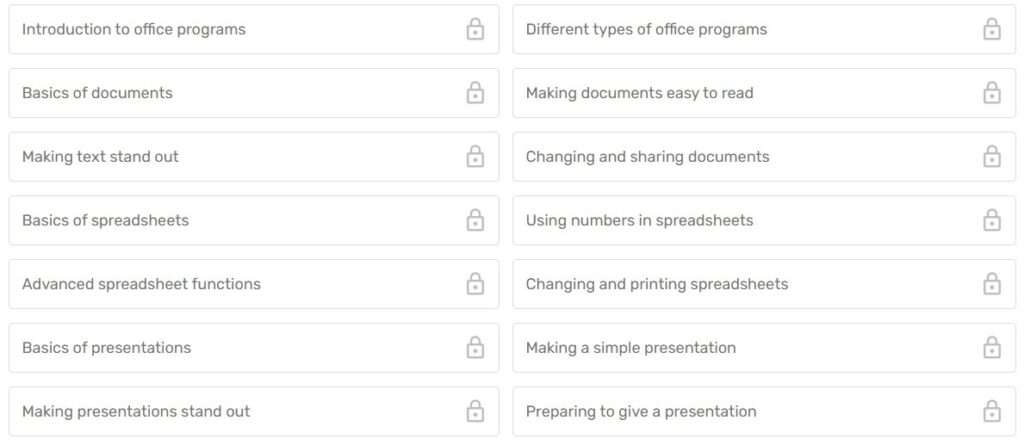
1. Using the Learn My Way platform you can access up to 14 different short-courses about working with Office programs. These are free to access. You just need to be registered with them, but we can help you to do this, and once you’ve done these courses you will be able to access so much more learning.
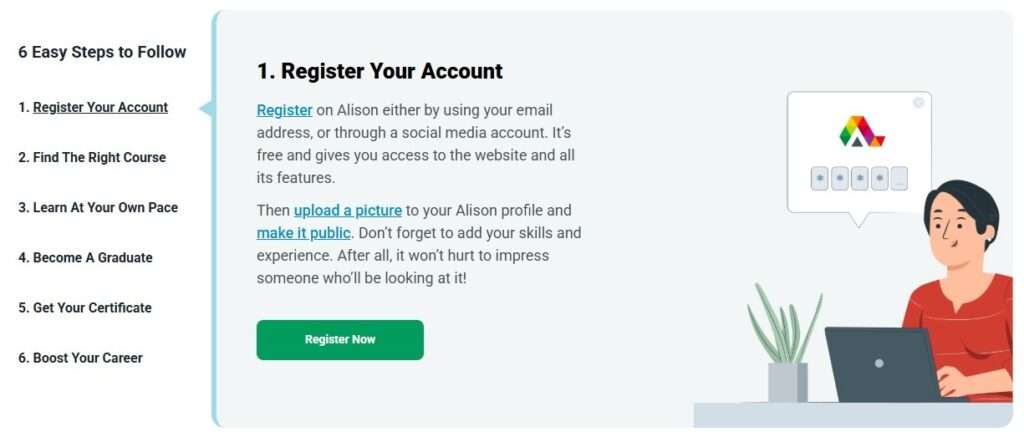
2. Using the Alison.com learning platform to access a variety of online courses for learning various office programs, including Word, Excel, and PowerPoint.
Build a great CV
Top tips for creating a great CV that will showcase your strengths and skills.
Strengths & Skills
Discover the top skills that employers are looking for when taking on new recruits, and build up the best version of yourself
Job Hunting
Discover all the skills you need to make the best out of looking for work online
Applying for Jobs
Everything you need to know about making job applications and being prepared for interviews
Experience
Don't let lack of experience hold you back from getting the type of job you want. There are many ways to fill the gaps in your experience